Notarial wording is one of the most important — and most misunderstood — parts of a notarization. Using the correct certificate wording helps documents get accepted and helps prevent delays caused by technical errors.
This guide explains common types of notarial wording used in Pennsylvania, when each is appropriate, and mistakes to avoid.
What Is Notarial Wording?
Notarial wording (also called a notarial certificate) is the official statement that describes what the notary witnessed during the notarization. It typically includes:
- The venue (state and county)
- The date of notarization
- The name(s) of the signer(s)
- The type of notarial act performed
- The notary’s signature, seal, and commission information
Common Types of Notarial Wording in Pennsylvania
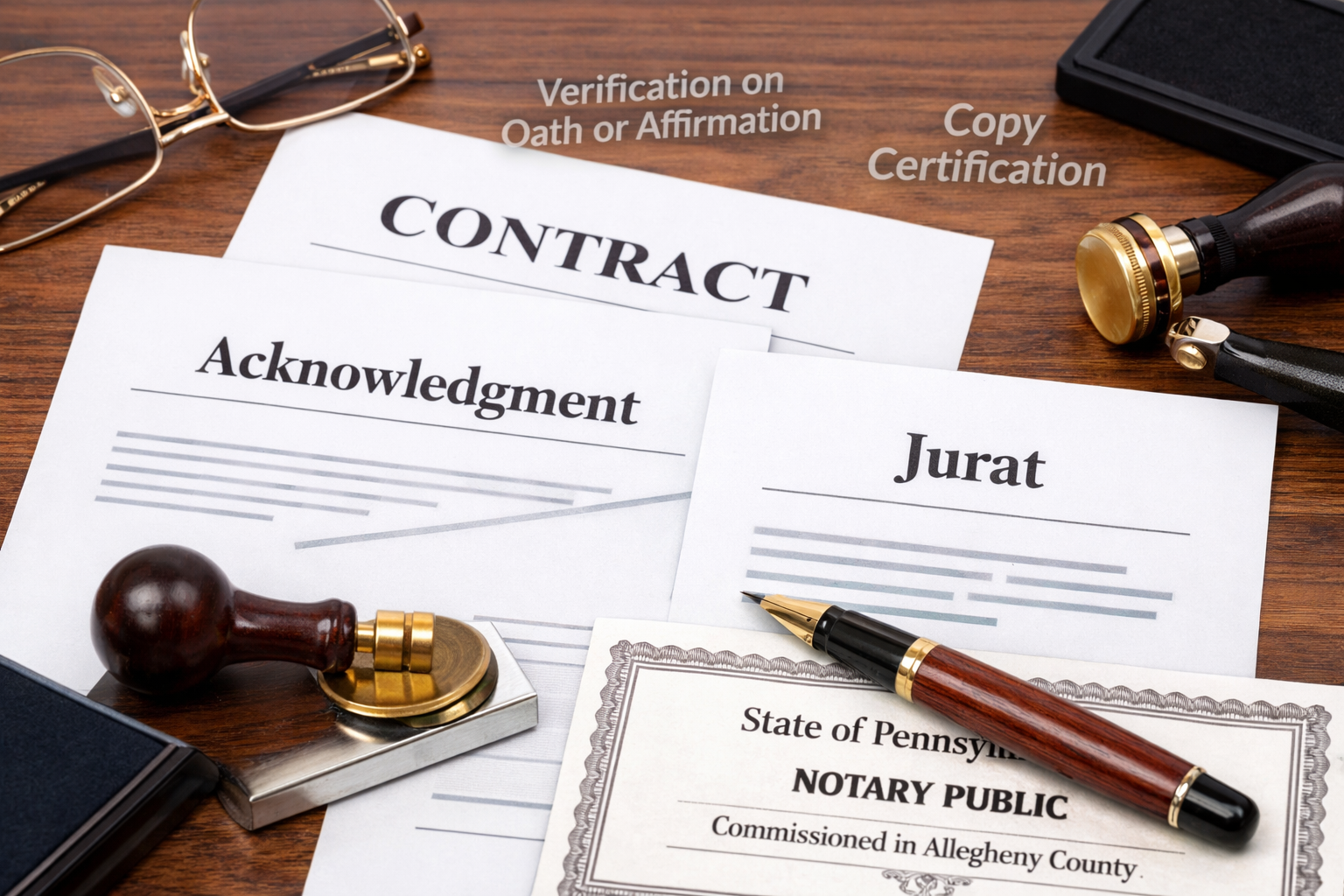
Acknowledgment
An acknowledgment confirms that the signer personally appeared before the notary and acknowledged signing willingly and for its intended purpose.
Common uses: powers of attorney, real estate documents, trusts, contracts.
Key point: The document may be signed ahead of time, as long as the signer acknowledges the signature in front of the notary.
Jurat
A jurat requires the signer to personally appear, sign in front of the notary, and swear or affirm the contents are true.
Common uses: affidavits, sworn statements, court-related documents.
Key point: A jurat includes an oath or affirmation.
Verification on Oath or Affirmation
Some Pennsylvania documents use verification language similar to a jurat. These typically involve a sworn statement regarding the truthfulness of the contents.
Copy Certification (Limited Use in PA)
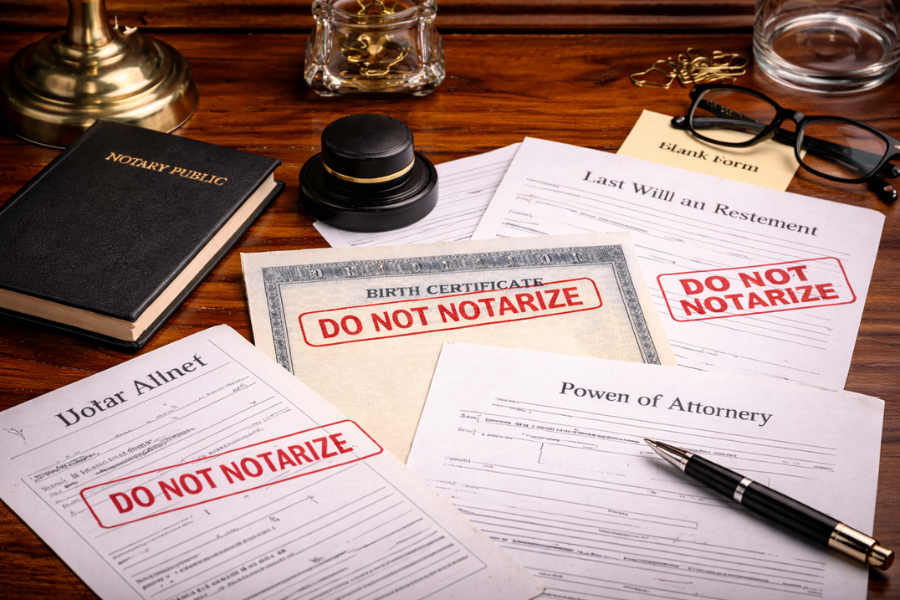
Pennsylvania notaries have limited authority to certify copies. In general, certain documents (including many vital records) are typically not appropriate for notarial copy certification. When in doubt, confirm what the receiving agency requires.
Choosing the Correct Notarial Wording
A notary cannot choose the type of notarization for the signer. The signer or the receiving agency must specify the notarial act needed.
If the signer is unsure, a notary may explain the differences between an acknowledgment and jurat — but the decision must come from the signer or the document recipient.
Common Notarial Wording Mistakes That Cause Rejection
- Incorrect venue (wrong state or county)
- Missing notarial certificate entirely
- Using an acknowledgment when a jurat is required (or vice versa)
- Incomplete signer names
- Illegible notary seal
Using Loose Certificates
If a document is missing correct notarial wording, a loose certificate may be used if permitted by the receiving agency.
Best practice: Ensure the loose certificate matches the notarial act performed and is properly attached to the document.
Why Correct Notarial Wording Matters
Proper wording helps protect the signer and notary, supports document acceptance, and reduces time-consuming re-signings — especially for time-sensitive paperwork like POAs, hospital documents, and real estate transactions.
Frequently Asked Questions About Notarial Wording in Pennsylvania
What is notarial wording?
Notarial wording is the official notarial certificate that explains what the notary witnessed, such as an acknowledgment or jurat, including required details like the venue and date.
What is the difference between an acknowledgment and a jurat in Pennsylvania?
An acknowledgment confirms the signer appeared before the notary and acknowledged signing willingly. A jurat requires the signer to sign in front of the notary and take an oath or affirmation.
Can a Pennsylvania notary choose the notarial wording?
No. A notary cannot choose the type of notarization. The signer or the receiving agency must specify which notarial act is required.
Why does correct notarial wording matter?
Incorrect notarial wording can cause documents to be rejected, delayed, or require re-signing, especially for legal, medical, or real estate documents.
This article is for general informational purposes and is not legal advice.
Need a Mobile Notary in Pittsburgh?
If you’re in Pittsburgh or the surrounding areas and have questions about whether your document can be notarized or what is required, Signings by Marion provides mobile notary services that come to you — including homes, offices, hospitals, and nursing facilities (when permitted).